
5 min read · By the AMFAC team
The short answer: Good snow and ice management in Maine is decided before the first flake. Map every site, put service levels in writing, treat walkways before storms instead of after, and plan for the roof and the salt damage too. If you have multiple sites, hold them all to one standard.
Maine winters don’t give facility managers much slack. Nor’easters hit the coast, inland sites get buried, and months of freeze-thaw turn yesterday’s slush into this morning’s ice. Through all of it, entrances have to stay safe, parking has to stay open and buildings have to stay dry, from October through April.
The properties that come through a Maine winter in good shape usually aren’t the ones with the biggest plow. They’re the ones with a plan. Here’s what to put in yours.
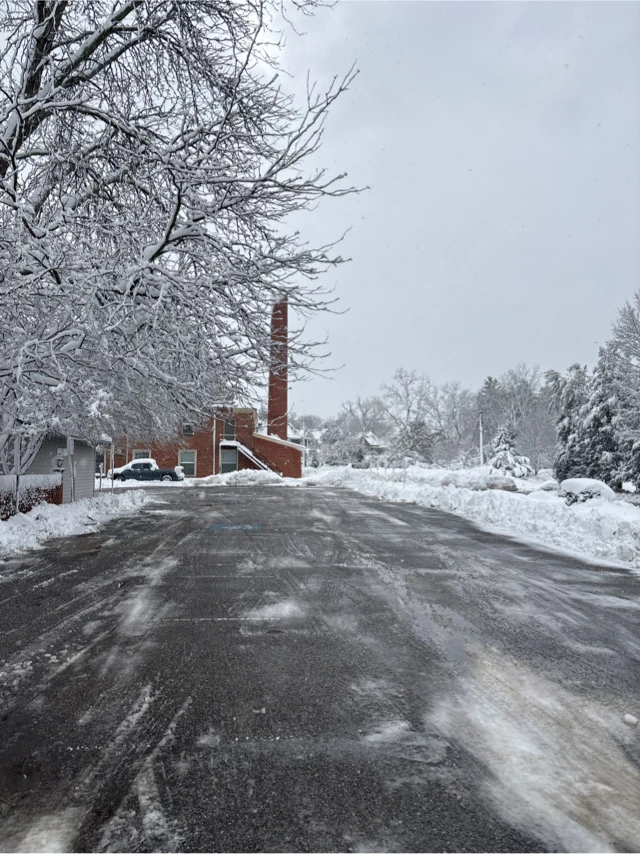
From the field: Most snow problems aren’t about the plow. They’re about the gaps: walkways nobody was assigned to, a pile that buries a storm drain and floods the lot during the thaw, a contract that never said who treats the stairs. Settle those before the season, and storm days get a lot quieter.
Start with a map of every site
Before the first storm, walk each property with your snow contractor and agree on a plan. Decide where snow will be piled, keeping it away from drains, entrances, sightlines and fire lanes. Mark the priority areas: entrances, ADA routes, fire exits and delivery doors. Flag the hazards plow drivers can’t see once it snows, like curbs, islands, hydrants and speed bumps.
Then share that map with everyone involved. When the site manager and the plow crew are working from the same plan, there’s a lot less arguing at 5 a.m.
Put the service levels in writing
Most snow disputes come from vague contracts. “Plow as needed” means something different to everyone. Spell out:
- The trigger depth for plowing, for example 2 inches
- How soon entrances and walkways must be cleared after a storm ends
- When pretreatment and de-icing happen, before and after storms
- Who handles sidewalks, stairs and roofs
- How each visit is logged and reported
Treat slip-and-fall risk as a priority
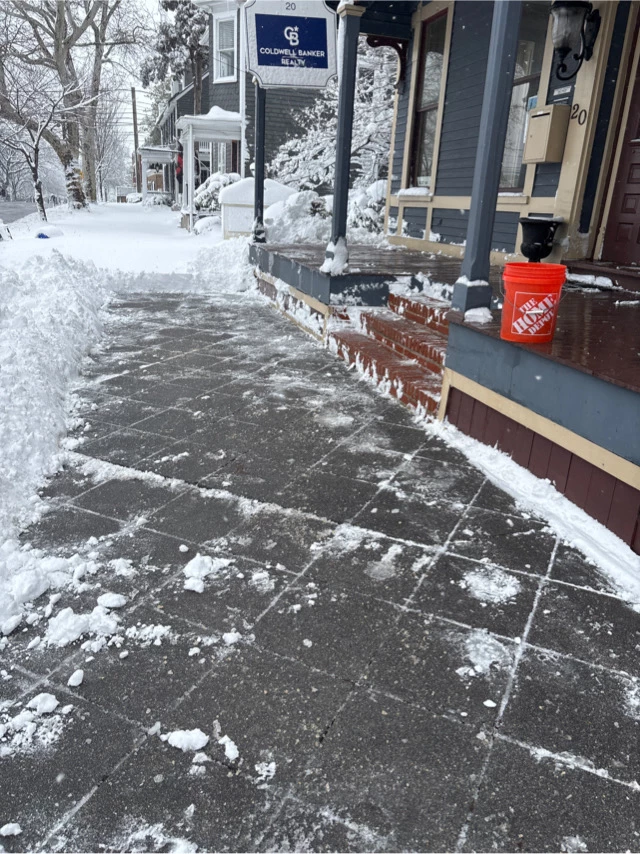
Winter slip-and-fall claims are a real cost for commercial properties, and most happen at entrances and walkways, not in the lot. The fix is timing. Treat walkways before a storm, not just after. Re-treat when melt refreezes overnight. Keep entry mats down and floors dry inside the door. And document every service visit with times and photos, so you can show what was done and when.
Plan for salt damage in the spring
Salt keeps people safe, but it’s hard on concrete, door thresholds, railings and landscaping, and coastal Maine properties already deal with salt air. Use the right de-icer for each surface, sweep up the excess in spring, and schedule a post-winter walk-through to catch damaged walkways, curbs and entryways before they become trip hazards.
Don’t forget the roof
Heavy, wet snow and ice dams can overload flat roofs and cause leaks. Watch for warning signs: sagging, interior doors that suddenly stick, new ceiling stains. If you see them, have the roof cleared by a qualified crew, and bring in a structural professional if you’re unsure.
Keep every site to the same standard
With properties from Portland to Bangor, the hardest part is consistency. One site gets cleared by 6 a.m., another at noon, and regional managers find out from customers. Use one service standard, one reporting format and one point of contact, so you know every site was handled the same way.
Choose the right de-icer for the conditions
Not all ice melt works the same, and using the wrong one wastes money and damages surfaces. The right product depends on how cold it gets and what you’re treating:
| De-icer | Where it works best | Watch out for |
|---|---|---|
| Rock salt (sodium chloride) | Mild winter days, roughly 15°F and up. The lowest cost per pound. | Loses most of its effect in deep cold. Hard on concrete, metal and plants. |
| Calcium chloride | Deep cold. Keeps working well below zero and acts fast. | Costs more. Can leave a slippery residue indoors if tracked in. |
| Magnesium chloride | Cold temperatures with less corrosion than rock salt. | Costs more than rock salt. Still needs careful use on new concrete. |
| Liquid brine (pretreatment) | Applied before a storm so ice can’t bond to the pavement. | Only works if it’s down before the snow starts. Timing is everything. |
Many experienced snow managers use a mix: brine before the storm, rock salt on most surfaces during mild events, and a faster, colder-rated product at entrances and stairs where safety matters most.
Pick the contract structure that fits the site
How you pay for snow and ice work changes how your contractor behaves. The three most common structures:
- Per push or per visit: you pay each time the crew plows or treats. Fair in light winters, expensive in heavy ones, and harder to budget.
- Per event: you pay per storm, usually tiered by snowfall. A middle ground that’s easier to forecast.
- Seasonal: one fixed price for the winter. The easiest to budget, but read the fine print on caps and what counts as an extra.
For multi-site portfolios, seasonal or per-event pricing usually makes costs easier to compare across locations. Whatever you choose, make sure de-icing, walkways and roof work are clearly in or out.
Questions to ask before you sign
- How do you prioritize my sites during a big storm, and when will each one be cleared?
- Who clears walkways, stairs and entrances, and when?
- How do you document each visit? Do we get times and photos?
- What insurance do you carry, and will you name us as additional insured?
- Who do I call at 3 a.m., and how fast will they answer?
Coastal vs. inland: two different winters
A property in Portland and one in Bangor can have very different seasons. Coastal sites see more freeze-thaw cycles, more wet, heavy snow and more salt exposure, which means more re-treating and more wear on concrete and metal. Inland and northern sites see more total snowfall and longer stretches of deep cold, which means more plowing, colder-rated de-icers and more attention to roof loads. A good plan accounts for both instead of treating every site the same.
Get winter-ready with AMFAC
AMFAC is a veteran-owned facility maintenance company supporting businesses across Maine, New Hampshire and Massachusetts. We provide snow and ice management alongside year-round facility maintenance, so your New England sites stay safe and open all season. One call. Problem owned.
FAQ
When should Maine businesses set up snow and ice management?
By early fall, so contracts, site plans and supplies are ready before the first storm.
Who is responsible for clearing commercial sidewalks in Maine?
It depends on the municipality and your lease. Check local ordinances and spell out responsibility in your contracts.
Does AMFAC provide snow and ice management for multi-site portfolios?
Yes. We manage snow and ice as part of seasonal facility programs, with consistent standards and reporting across every location.