
5 min read · By the AMFAC team
The short answer: Start with the three systems behind most winter emergency calls: the roof, the heat and the pipes. Then move outward to doors, parking areas and safety gear. If you manage more than one site, use the same checklist everywhere and give every building an owner.
Every New Hampshire winter follows the same script. The first real cold snap arrives, and within a week the calls start: a rooftop unit that won’t fire, a door that stopped latching, a ceiling stain under a blocked roof drain. None of these problems start in January. They start in October, when there’s still time to catch them and nobody has a reason to look.
That’s the case for winter facility maintenance in New Hampshire: a few hours of prep in the fall is cheaper than one emergency call in a storm. Here’s where to focus, in the order we’d tackle it.
From the field: The January emergency usually starts in September. Most winter calls trace back to three things: roof drains packed with fall leaves, pipes on exterior walls that never got insulated, and door closers that quit when the temperature dropped. All three are cheap to fix in the fall and expensive to fix in a storm.
Start at the top: roofs and gutters
Snow load is only part of the risk. The bigger issue is water that can’t drain. When gutters and roof drains are packed with leaves, meltwater pools, refreezes and finds its way inside. Flat commercial roofs are especially exposed, because a single blocked drain under a foot of snow can hold back a lot of water.
- Clear gutters, downspouts, roof drains and scuppers
- Look for loose flashing, damaged membrane and spots where water already pools
- Decide now who clears the roof after heavy snow, so you’re not searching for a crew mid-storm
Make sure the heat holds
Heating systems tend to fail on the coldest night of the year, because that’s when they work hardest. A pre-season inspection catches worn parts, dirty filters and controls that drifted over the summer. It’s also the time to check the rooms that can’t afford to get cold, like server rooms and mechanical spaces.
- Schedule heating inspections and replace filters
- Test thermostats and building automation schedules
- Secure rooftop unit panels and clear intakes
- Confirm backup heat for critical spaces
Protect the pipes
Frozen pipes are the most expensive winter surprise we see, and they almost always happen in the same places: loading docks, exterior walls, vestibules and unheated storage. Insulate those lines, drain exterior hose bibs and irrigation, and keep any space with plumbing at 55°F or warmer, even when the building is closed for the weekend. We go deeper on this in our guide to preventing frozen pipes in commercial buildings.
Fix the doors before they stick
Cold air shrinks weatherstripping and stiffens door closers, so doors that worked fine in September stop latching in December. That’s a security problem and a heating bill problem. Replace worn sweeps and weatherstripping, adjust closers, and test automatic doors and ADA openers in the cold. Put entry mats down early so salt and slush stay off your floors.
Get the parking lot ready before it disappears
Once snow covers the lot, curbs, islands and hydrants become hazards for plow drivers. Mark them now. Patch potholes and cracks before freeze-thaw cycles widen them, and check that exterior lighting works, since your staff and customers will be walking to their cars in the dark by 4:30.
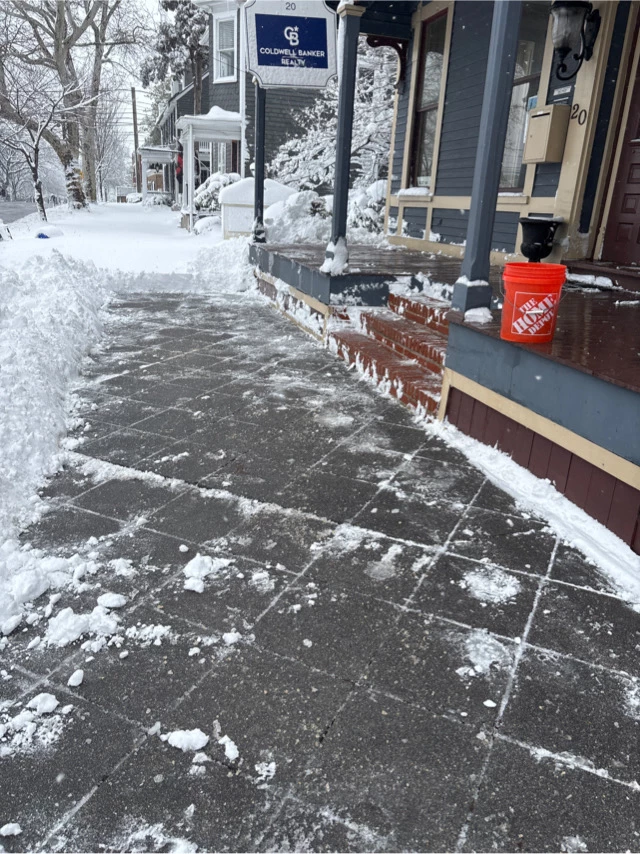
Confirm your snow and ice contract covers walkways, entrances and stairs, not just the drive lanes. Gaps there are where slip-and-fall claims come from.
Don’t skip the safety checks
Test emergency lighting, exit signs and generators before you need them. Update the emergency contact list for each site, and make sure fire sprinkler lines in unheated areas are protected from freezing.
If you manage more than one site
The biggest winter risk for a multi-site portfolio isn’t any single system. It’s the building nobody got to. One site gets a full prep, another gets skipped, and that’s where the January emergency comes from. Use one checklist for every property, assign an owner to each site and track completion in one place.
A simple prep timeline
Winter prep is easier when it’s spread out. Here’s a rough schedule that works for most New Hampshire properties. If you’re already past a step, just start where you are.
| When | Focus |
|---|---|
| Early October | Roofs, gutters and drains. Book heating inspections before contractors’ calendars fill up. |
| Late October | Pipes: insulate cold runs, drain exterior hose bibs and irrigation, label shutoffs. |
| Early November | Doors, weatherstripping, closers and entry mats. Mark curbs and hydrants. |
| Before the first storm | Confirm the snow and ice contract, stock ice melt, test emergency lighting and generators. |
| All winter | Spot-check thermostats in low-use spaces, watch roof drains and walk each site after every major storm. |
48 hours before a big storm
When a nor’easter or a deep freeze is in the forecast, a short checklist goes a long way:
- Confirm your snow contractor has the storm on their schedule, including walkways and entrances
- Check that heat is set to at least 55°F in every space with plumbing, especially if the building will be closed
- Clear anything blocking roof drains or downspouts you can safely reach
- Move vehicles, deliveries and dumpsters out of plow paths
- Make sure on-site staff know where the water shutoffs and emergency contacts are
After the storm: a 15-minute walk-through
Once the snow stops, walk each site before people arrive. Look for ice at entrances and on stairs, snow piles blocking fire exits or hydrants, sagging or ponding on flat roofs, new ceiling stains inside, and doors that no longer close or latch. Catching these the morning after is what keeps a storm from turning into a week of problems. Snap photos as you go, so you have a record if anything comes up later.
What a good maintenance partner should handle
Most facility teams don’t need a full-time crew at every building. They need someone who shows up on a schedule, works through a punch list and reports back. That’s how our AMFAC Handyman Program works: a walk-through at each site, scheduled visits to work the list, and a summary after every visit of what was done and what’s next. For winter, that means the weatherstripping, door closers, small repairs and seasonal checks get done before the cold, not after.
Need help getting your New Hampshire sites ready?
AMFAC is a veteran-owned facility maintenance company serving New Hampshire, Maine and Massachusetts. Our commercial handyman program handles seasonal prep across every location you manage, with one point of contact and a report after every visit. One call. Problem owned.
FAQ
When should New Hampshire businesses start winter facility maintenance?
Ideally in October or early November, before the first hard freeze. If you’re behind, focus on roofs, heating and pipes first.
What’s the most common winter facility problem?
Frozen and burst pipes, followed by roof leaks from ice dams and blocked drains.
Can AMFAC handle winter prep for multiple locations?
Yes. We run the same seasonal checklist across every site and report back on what was done at each one.